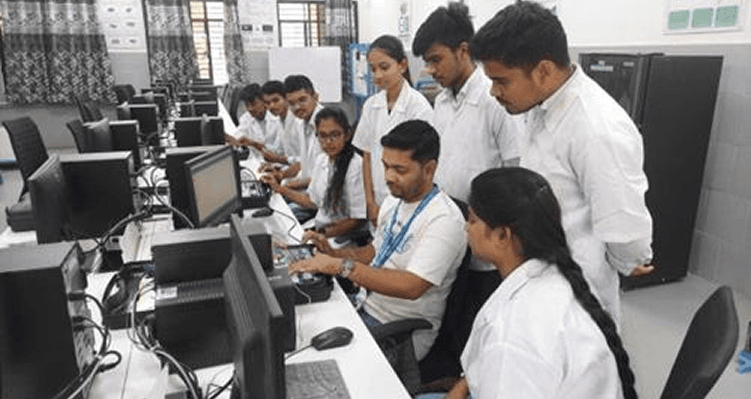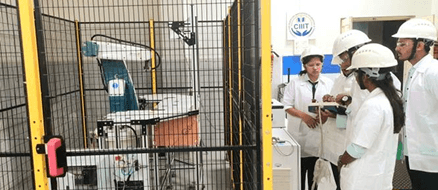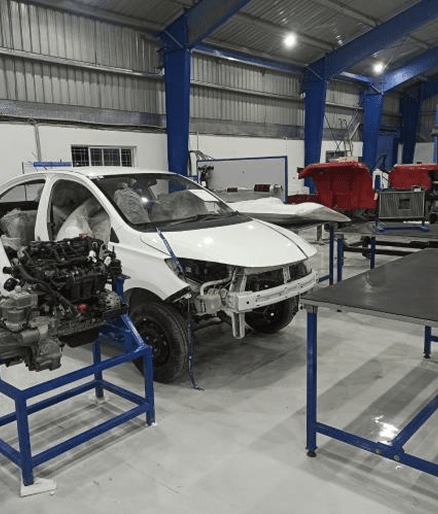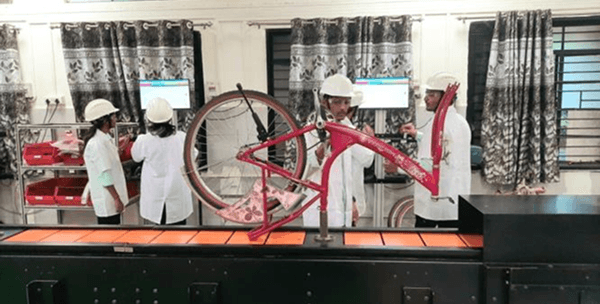
The Internet of Things, or IoT, often sounds like a futuristic concept—smart homes, connected cars, and intelligent cities. But at CIIIT, IoT is not just a topic discussed in classrooms. It's something students experience hands-on by building real smart devices that connect the physical world with digital intelligence.
What is IoT?
IoT is all about enabling devices to sense, communicate, and respond. From sensors collecting data to systems making decisions based on that data, IoT turns ordinary objects into smart solutions. At CIIIT, students don't just learn these concepts theoretically—they apply them through practical projects that mirror real industry challenges.
Learning by Building, Not Just Reading
One of the biggest strengths of IoT training at CIIIT is its focus on experiential learning. Students work with sensors, microcontrollers, communication modules, and software platforms to create functional prototypes. Whether it's a smart temperature monitoring system, automated lighting control, or a device that tracks environmental conditions, every project helps bridge the gap between theory and application.
This hands-on approach allows students to understand how individual components work together. They learn how data is collected through sensors, transmitted over networks, processed using software, and finally used to trigger intelligent actions. These are not just academic exercises—they reflect how IoT systems operate in industries like manufacturing, healthcare, agriculture, and smart infrastructure.
Developing Industry-Relevant Skills
Building smart devices at CIIIT helps students develop a skill set that goes far beyond textbooks. They gain exposure to embedded systems, basic programming, hardware integration, and cloud connectivity. Just as importantly, they learn how to troubleshoot problems, optimize performance, and think logically when things don't work as expected—which is often the most valuable learning experience.
IoT projects also encourage collaboration. Students work in teams, divide responsibilities, share ideas, and solve problems together. This mirrors real workplace environments, where cross-functional teamwork is essential for successful product development.
From Campus Projects to Career Readiness
What makes IoT training at CIIIT impactful is its career-oriented approach. The projects students build are not isolated experiments; they are stepping stones toward future roles in technology-driven industries. By working on smart devices early, students become comfortable with emerging technologies and gain confidence in handling real-world systems.
These experiences help students stand out during internships, interviews, and industry interactions. Recruiters increasingly look for candidates who can demonstrate practical knowledge, and IoT projects provide tangible proof of skills and initiative.
A Smart Step Toward the Future
IoT is no longer a niche technology—it is becoming a core part of modern innovation. By actively building smart devices at CIIIT, students are not just learning about IoT; they are preparing themselves for a connected future.
Through hands-on projects, problem-solving, and real-world applications, IoT at CIIIT transforms students into creators, not just consumers of technology. And in a world driven by smart solutions, that makes all the difference.